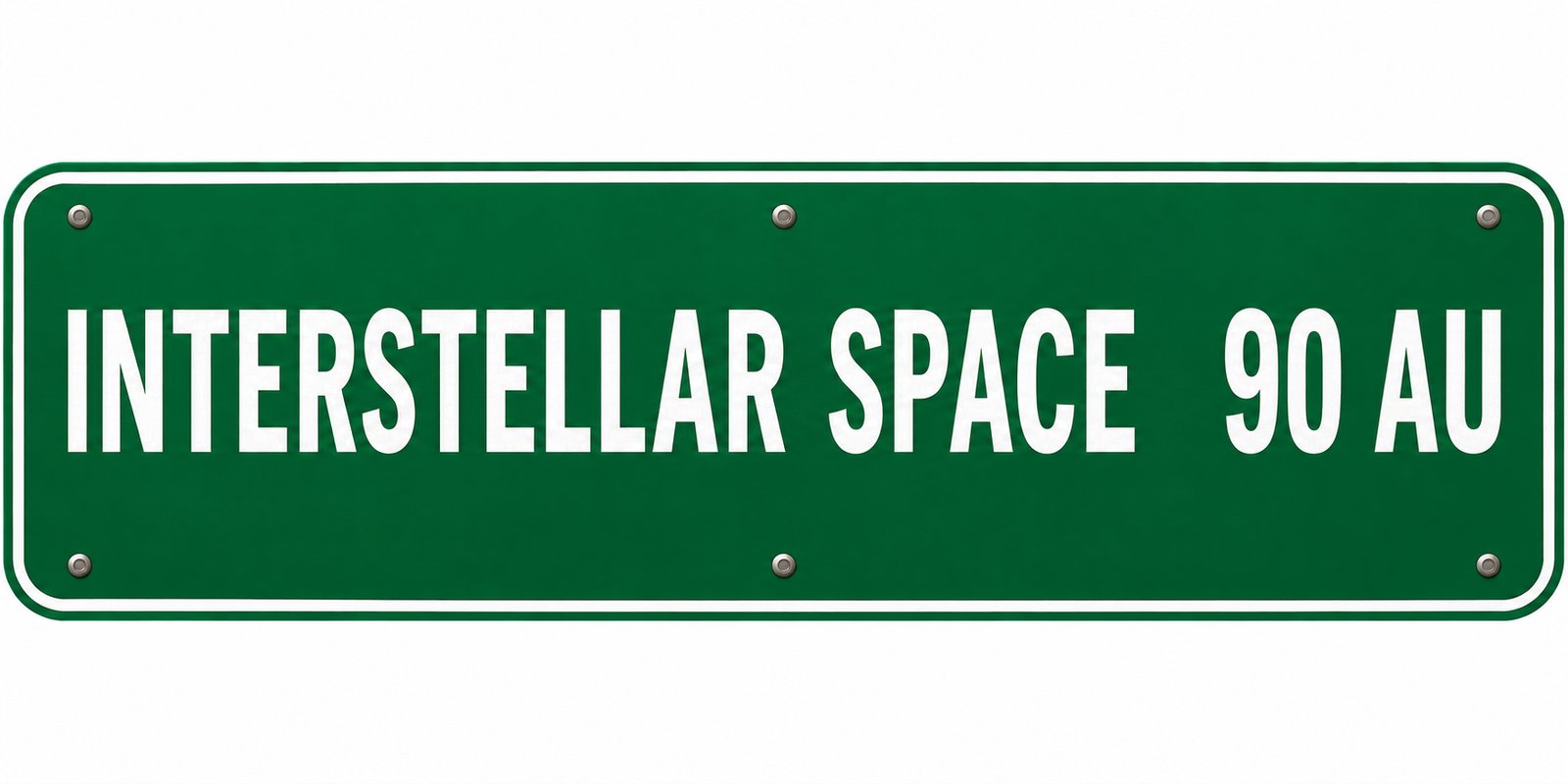
We still are not at the edge of our Solar System. The end of the Solar System is often considered the heliopause. Beyond the outer edge of the Kuiper Belt, the Sun's solar wind continues outward until it encounters the interstellar medium. At the heliopause, roughly 120 Astronomical Units from the Sun, the solar wind no longer dominates. Beyond this boundary, we say we have entered interstellar space.
Voyager 1 and Voyager 2 were launched in the 1970s and have traveled through the Kuiper Belt and the more distant scattered disk. Both are now in interstellar space..
In interstellar space, the distances become even more enormous. To describe these vast distances, we now move to another unit of measurement—the light-year. A light-year is the distance light travels in one year. It is a number so large that it's difficult to fathom.
To add some perspective, the Artemis II astronauts took three days to travel roughly 250,000 miles to the Moon. Light covers that distance in only about one and a half seconds.
In November 2026, Voyager 1 will be approximately one light-day from Earth. In other words, a radio signal traveling at the speed of light will take an entire day just to reach it.
The nearest star to our Sun is Proxima Centauri. We can't see it from Southern California, but it is about 4.25 light-years away. On the scale we've explored today, where one Astronomical Unit equals 5 feet—the Sun and Earth are 5 feet apart and Neptune is about 150 feet from the Sun.
So if you would like to continue on to Proxima Centauri, I hope you brought your hiking boots, because you will have to hike all the way to Las Vegas!
To finish the walk, press “What’s Next”