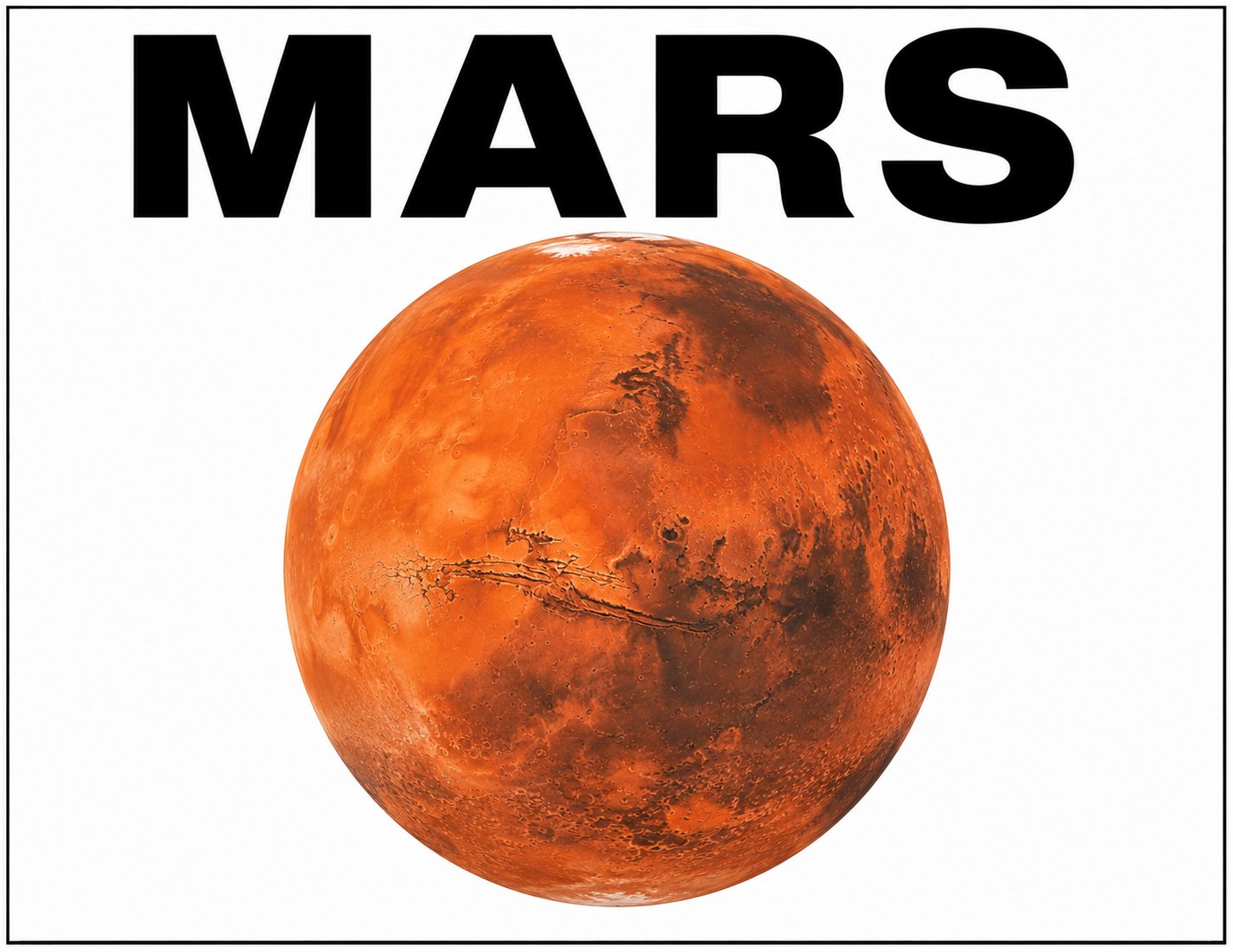
Moving out to one and a half Astronomical Units, we come to the planet Mars. Mars has about half the diameter of Earth. We know that Mars once had rivers and lakes, and probably oceans, and it still has polar ice caps today. Over time, Mars lost most of its atmosphere and its surface water disappeared.
Mars is also home to the largest volcano known, Olympus Mons. It is more than twice the height of Mount Everest. Mars has two small moons.
Humanity has launched more than 50 missions toward Mars, and many of the early missions failed. Landing on Mars presents a challenge because radio signals take about 3 to 22 minutes to travel between Earth and Mars. That means we cannot control a spacecraft as it lands—it has to land itself.
As computing technology improved, spacecraft became capable of much more sophisticated automated landings.
Perseverance is the most recent rover sent to Mars. It has been there for several years and continues to send back its findings. That mission included Ingenuity, the first helicopter ever to make a powered flight on another planet making 72 flights, before damage to its rotor blades during its final landing ended its flying career.
To continue, move to the Asteroid Belt, then press Asteroid Belt on your phone.