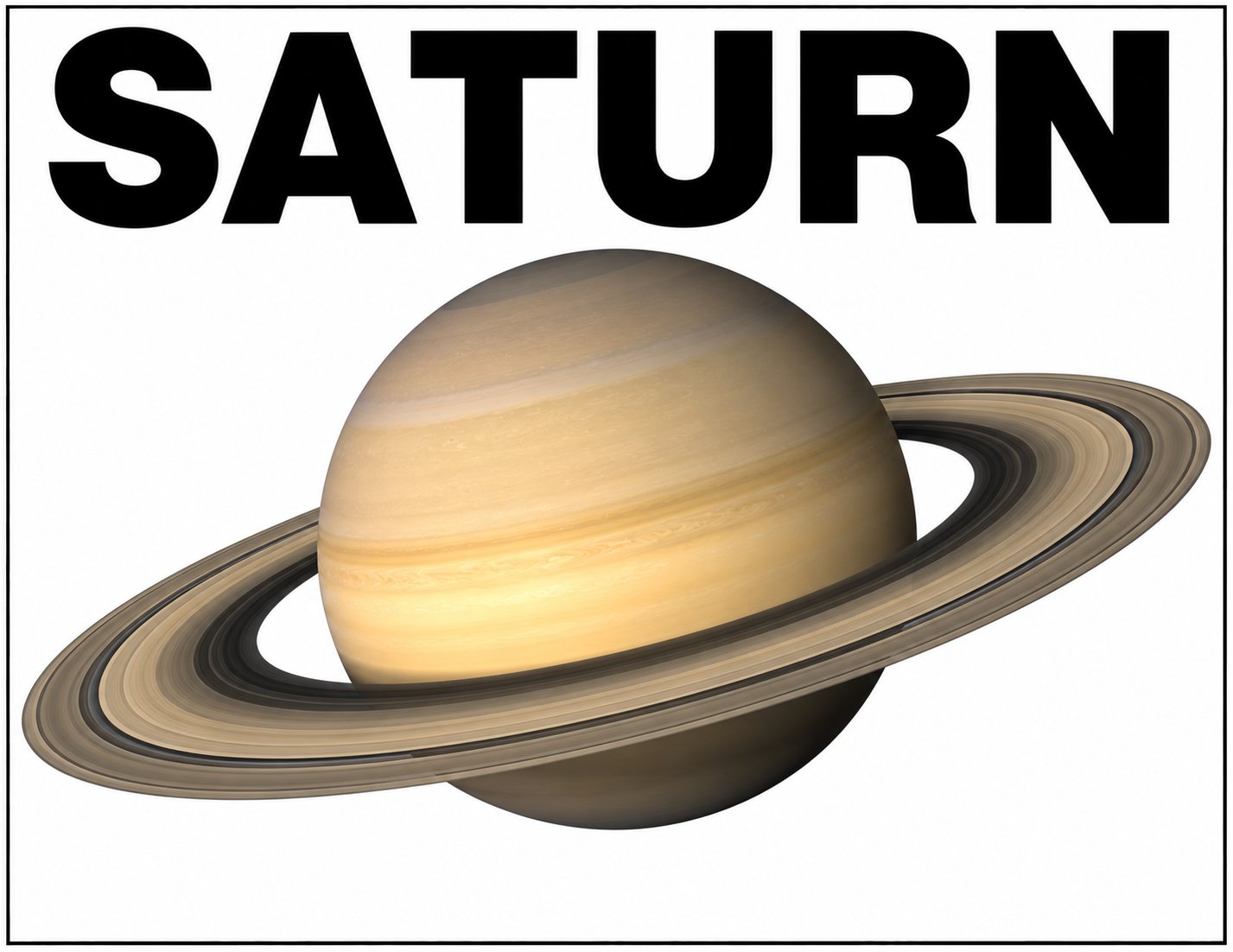
Our next stop is at 9½ Astronomical Units, the planet Saturn—possibly the most famous planet other than our own Earth.
Scientists think Saturn's rings may be the remains of one or more icy moons that were broken apart by collisions or Saturn's gravity. The rings consist mainly of water ice, along with some rock and dust. There are seven major groups of rings containing thousands of individual ringlets.
Saturn isn't the only planet with rings—all four giant planets have them—but Saturn's bright, icy rings are by far the most spectacular.
Saturn is also the planet with the most known moons. As of July 2026, astronomers have discovered 285 moons.
The giant planets and their moons contain enormous amounts of water ice. NASA is looking at missions to explore these moons.
EELS—the Exobiology Extant Life Surveyor—is an experimental snake-like robot being developed at JPL to explore terrain that conventional rovers cannot reach. A potential application is Enceladus, where a future version of such a robot might someday descend
Dragonfly is a planned rotorcraft mission that will explore Titan, Saturn's largest moon, to investigate its chemistry and habitability. Titan has a thick atmosphere that makes flight possible. Dragonfly is scheduled to launch later this decade.
To continue, move to Uranus, then press Uranus on your phone.